

When you start feeding your baby expressed breast milk, it’s completely normal to have questions. You’ve carefully pumped and stored your milk — in the fridge or freezer — and now comes the moment of preparing a feed. Am I warming it correctly? Is it safe? Am I respecting the milk?
The good news is that warming breast milk doesn’t need to feel complicated. Once you understand the right temperature and how different warming methods work, everything becomes much more intuitive.
1. Do you always need to warm breast milk?
No. Breast milk does not need to be warmed to be safe. Freshly expressed milk or milk at room temperature can be offered as it is.
That said, many babies prefer warm milk, especially when feeding from a bottle, as it feels closer to the temperature of milk during breastfeeding. Warming can also be helpful after storage, as breast milk naturally separates when refrigerated or frozen, with fat rising to the top. Gentle warming helps the milk blend back together, restoring a smooth, familiar consistency.
2. The ideal temperature for breast milk
Breast milk is best served at 36–37°C, close to body temperature. At this range, it feels natural to your baby and helps preserve its nutritional and immune properties.
Temperatures above 40°C should be avoided. Excessive heat can affect some of the components that make breast milk so valuable. This is why gentle, controlled warming matters far more than speed.
3. Two common ways parents warm breast milk
In everyday life, parents typically rely on two main methods: warming with hot water or using a bottle warmer. Both can be safe when done correctly; the difference lies in time, precision, and practicality.
A warm water bath works by gradually transferring heat from the water to the milk. It’s gentle, but slow, and often impractical outside the home.
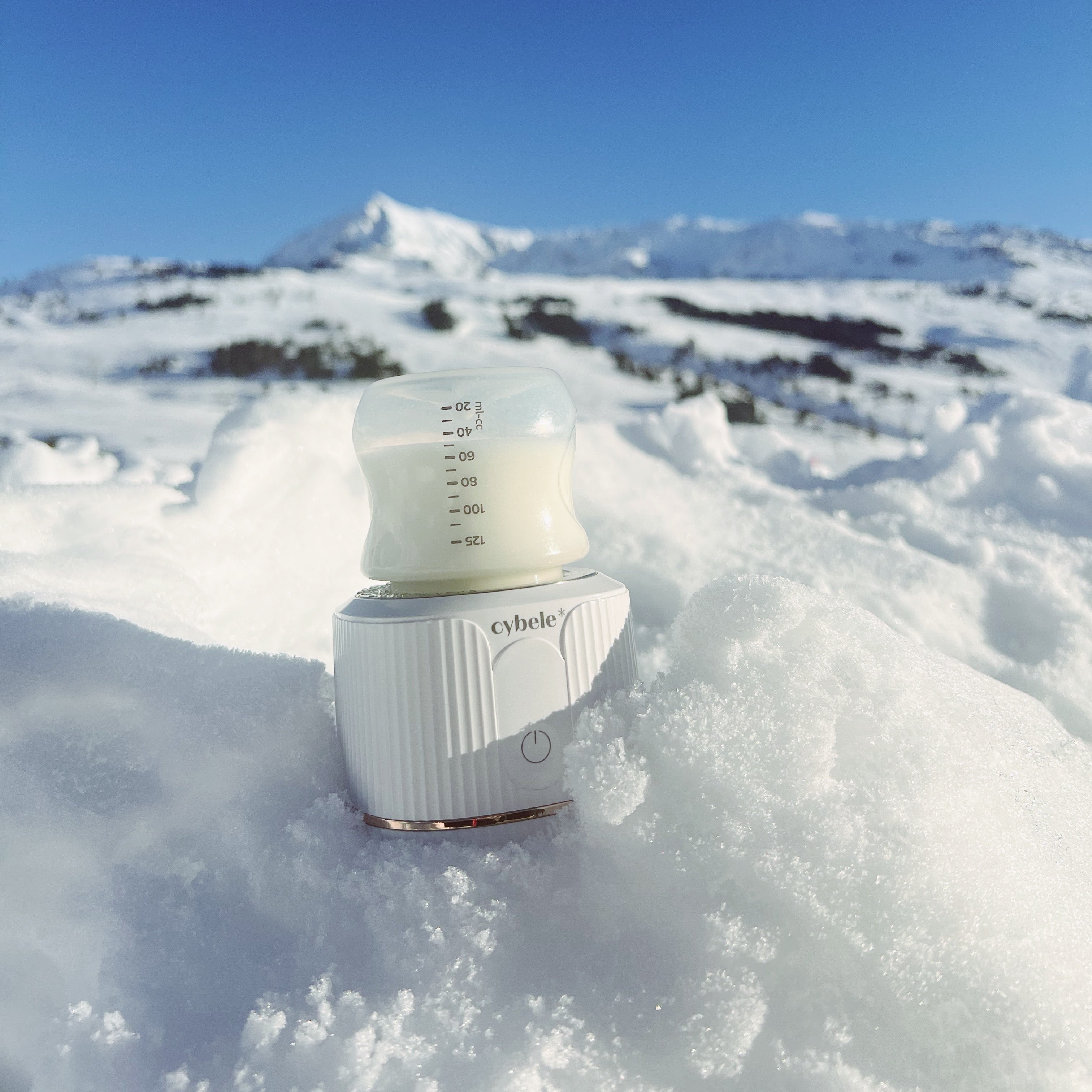
Bottle warmers, especially portable ones, reflect how feeding routines have evolved. They are designed to warm milk accurately and consistently, without relying on a kitchen, running water, or guesswork — making them particularly useful when you’re out, traveling, or feeding at night.
4. Warming refrigerated breast milk
Breast milk stored in the refrigerator is not frozen, so it doesn’t need to be thawed — it simply needs to be warmed gently before feeding.
With the traditional water-bath method, the sealed bottle or milk bag is placed in hot (not boiling) water. The milk warms gradually as heat transfers from the water. This process often takes 15 to 20 minutes, depending on how cold the milk is and how much there is.
Using a bottle warmer simplifies this step. The milk is warmed evenly and gently, reaching the ideal feeding temperature in around 3 minutes, even when you’re not at home. Because the temperature is controlled, the risk of overheating is reduced, helping protect the milk’s nutrients and antibodies.
5. Warming frozen breast milk
Frozen breast milk needs to be thawed before it is warmed.
The gentlest option is to move it from the freezer to the refrigerator and allow it to thaw slowly, ideally overnight. Once thawed, it can be warmed in the same way as refrigerated milk.
When time is limited, frozen milk can be thawed in its sealed container under running water, starting cool and gradually becoming warmer. After thawing, the milk should be warmed gently to feeding temperature.
Frozen or thawed milk should never be thawed at room temperature, refrozen, or reheated once it has already been warmed.
6. Why precision makes such a difference
Breast milk is delicate. Uneven or excessive heat can create hot spots and affect its natural properties. That’s why consistency and precision are so important when warming it.
This is where a well-designed bottle warmer offers real peace of mind.
7. How Stellar® supports safe warming anywhere
Stellar® Portable Baby Bottle Warmer was designed with the sensitivity of breast milk — and the realities of everyday family life — in mind. Its intelligent technology warms milk gradually and evenly, with precise temperature control, bringing it to the ideal feeding temperature without rushing or overheating.
Being portable, it allows parents to prepare a feed with the same level of care at home, on a walk, in the car, while traveling, or during nighttime feeds, without depending on a kitchen or improvised solutions.
By warming milk consistently and accurately, Stellar® Portable Baby Bottle Warmer helps preserve nutrients and antibodies while easing the uncertainty many new parents feel. Wherever you are, the result is always the same: milk warmed with care, in just a few minutes, and with confidence.
That’s what makes it possible to offer something so simple — and so important — as the perfect temperature, anytime and anywhere.
8. What to avoid when warming breast milk
Some methods are best avoided. Microwaving breast milk is not recommended, as it heats unevenly and can create dangerous hot spots that may burn your baby. There are also concerns that microwaves can affect some beneficial components of breast milk.
It’s also important not to reheat milk once it has already been warmed, and not to refreeze milk that has been thawed. These small precautions help keep every feed safe.
9. A calmer feeding routine
Every baby is different, and every family finds its own rhythm. What matters is understanding the basics — ideal temperature, gentle warming, and safe methods — so you can make decisions calmly and confidently.
With a clear routine and the right tools, warming breast milk becomes a simple, reassuring part of caring for your baby — not something to second-guess.
You got this.
— Cybele Star 💛
How to Choose, Clean and Care for Your Baby’s Bottles
UV-C and Baby Care: What Parents Should Know